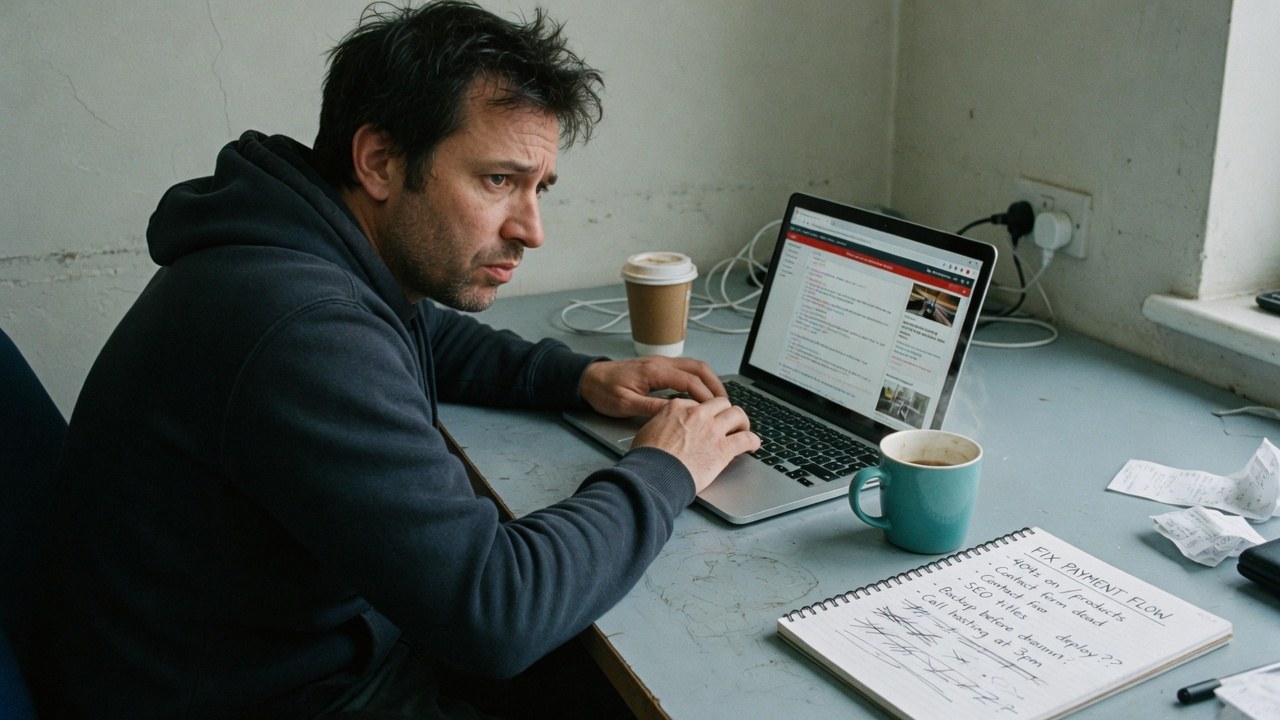
The call usually comes after something already broke
The site is down and the developer who built it is gone. A plugin update white-screened the homepage in peak season. Google flags the site as compromised while ads still run. Or nothing is technically "broken": the site is so slow and dated that it quietly costs deals every week.
Website rescue is stabilize first, fix properly second. I do that work as a solo senior operator: forensics, repair, rebuild when needed, and a handoff someone else could maintain. Portal-shaped disasters get the same honesty as portal rescue for failing software migrations.
Who this is for
Owners with a hacked, broken, or abandoned site and no trusted technical contact.
Teams mid-meltdown after a bad deploy, bad plugin, or bad host.
Businesses whose site is technically up but so slow or outdated that it fails as a sales tool.
Anyone who needs an honest repair-versus-rebuild call, not a scare pitch.
Who this is not for
Cosmetic redesigns with no emergency. Book a normal website project.
Legal or PR crisis management beyond the technical recovery. I fix the site and security; your counsel handles the rest.
Buyers who want a miracle 2-hour full rebuild of a complex app for pocket change. Stabilization can be fast; proper rebuilds take real scope.
Situations I walk into
- Hacked or compromised sites. Malware cleaned, backdoors closed, search warnings cleared, hardening so it does not repeat next month.
- Broken functionality. Forms, checkout, databases, plugin conflicts.
- Abandoned projects. Missing passwords, missing backups, mystery hosting.
- Slow and dated sites. Multi-second loads, broken mobile, brand from another decade.
- Platform dead ends. Ancient WordPress, page builders you outgrew, undocumented custom apps.
How a rescue runs
1. Stabilize. Clean backup, stop active damage, restore what customers see.
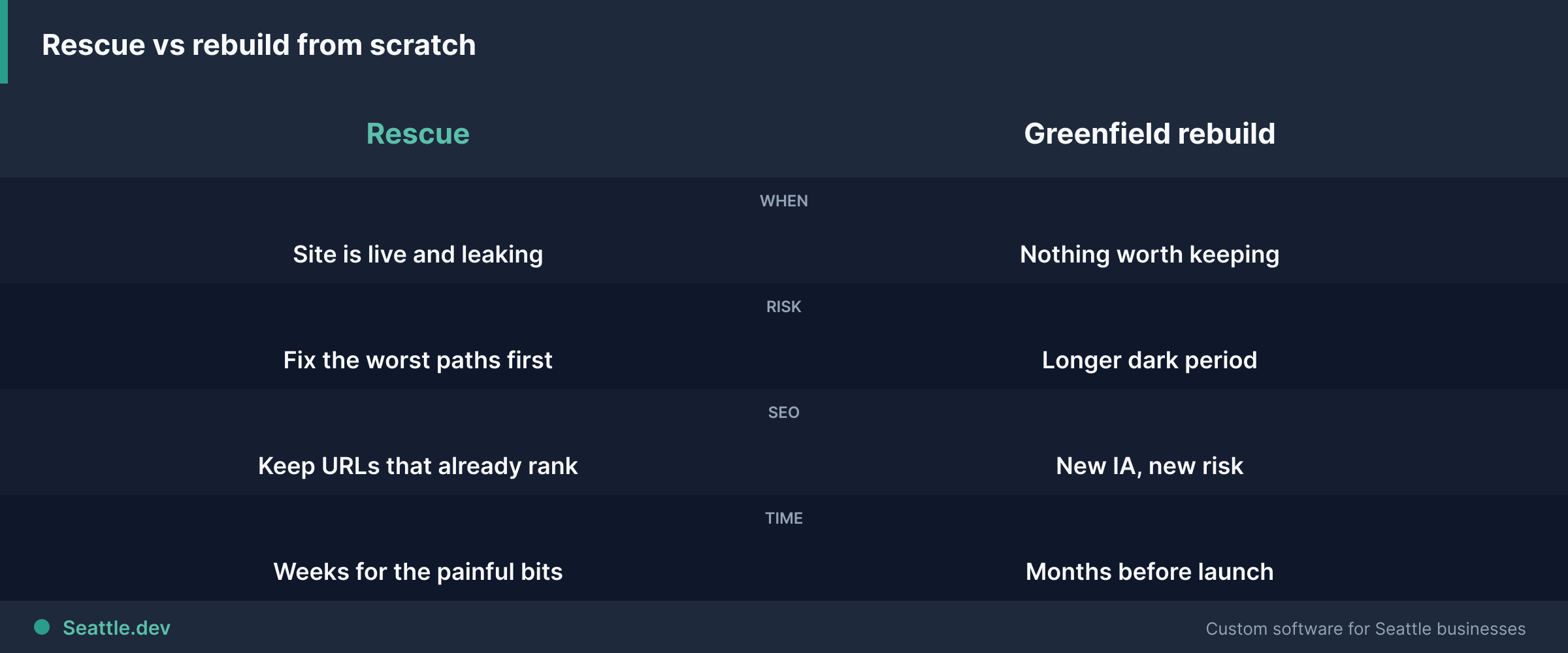
2. Assess. Plain-English picture: security, code and hosting health, what is worth keeping. Patching a sound site is cheap; patching a rotten one is how you pay twice.
3. Fix or rebuild. Prioritize by business impact. Rebuilds follow the same discipline as redesigns for Puget Sound brands like Farmers Electric and San Juan Beverage Company: keep brand equity and search rankings, fix structure underneath. URLs and metadata migrate deliberately. When data has to move with the site, use data migration strategies for switching systems.
4. Hand over properly. Credentials, documentation, a system someone else could touch. A rescue that ends with "only I can touch it" is not a rescue.
After the rescue
Most rescued sites move onto managed hosting and ongoing support, because the cheapest emergency is the one monitoring catches early. Longer-term, prevent the next crisis with building business software that lasts. Rescues are scoped after assessment: fixed-price once I know the damage, not open-ended hourly on a bleeding site.
Next step
Site down, hacked, or held together with hope? Request a quote or schedule a consultation. Tell me what happened. I will say quickly whether it is a repair, a rebuild, or something in between.