
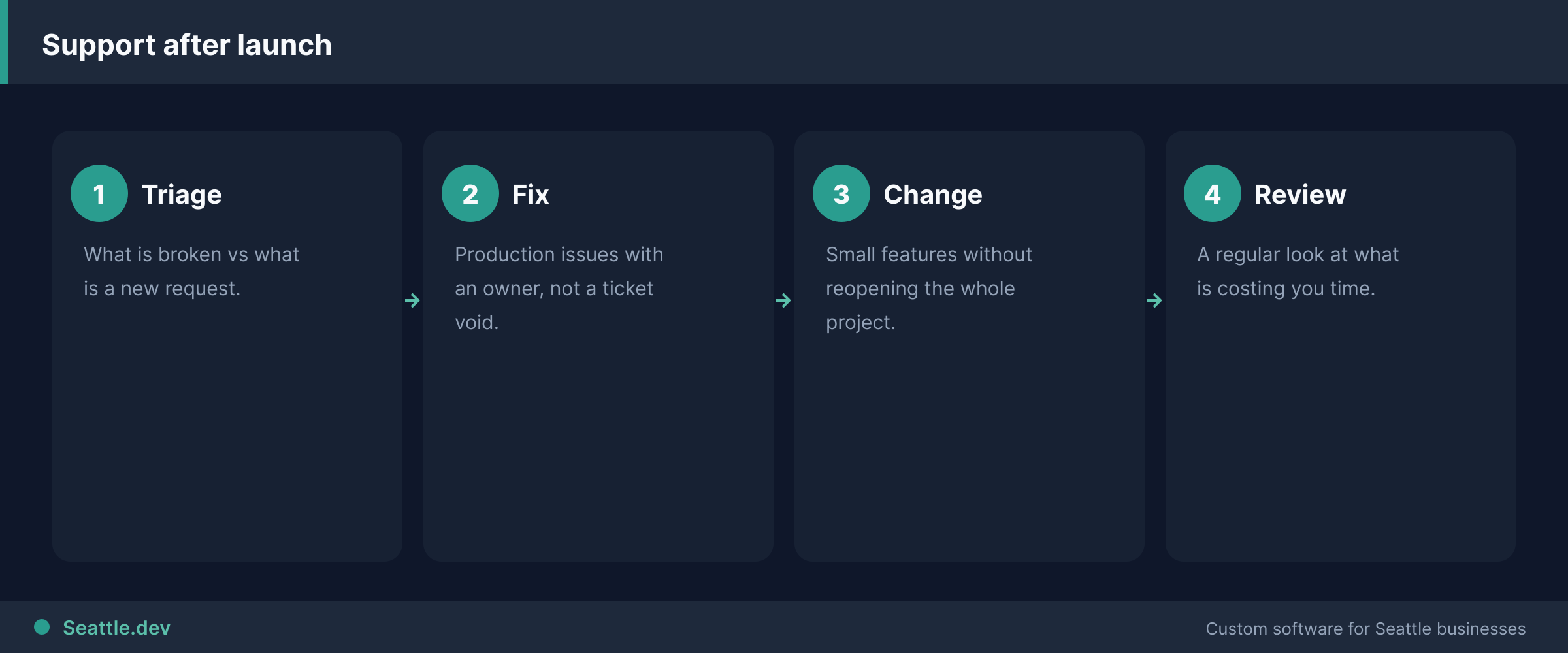
Support after launch so the system does not rot
Launch day is not the finish line. APIs change, browsers update, someone needs a new report, and a dependency grows a security advisory. Ongoing support is a maintenance relationship: I stay familiar with your system, handle small fixes fast, and keep the boring health work from piling up into another emergency project.
Plans start around $750 per month for most of the systems I maintain. Exact scope depends on complexity and response expectations. How the relationship should feel day to day is closer to what small businesses should expect when working with a developer than to a faceless ticket queue. You always know what is in the plan and what triggers a separate estimate.
Who this is for
Teams running a custom portal, integration, or business app that customers or staff touch daily. Continuous small fixes beat big rewrites; that is the practical side of avoiding technical debt in business software.
Owners who want one person who already knows the codebase when something breaks at 10 AM on a Tuesday. Support is also how you avoid the end state described in portal rescue for failing software.
Companies that prefer a light monthly plan over surprise hourly bills after every fire.
Clients on managed hosting who want the same accountable human for app and infrastructure questions.
Who this is not for
Unlimited product development disguised as "support." New features get scoped and quoted. I will not pretend a maintenance plan is a full-time product team.
Systems nobody uses. If the app is abandoned, turn it off or archive it. Do not pay me to watch a ghost.
Buyers who want 24/7 multi-region NOC coverage. I am a senior solo operator on Pacific hours with clear escalation paths, not a global call center.
What support includes
Health and updates. Dependency patches, minor framework updates, monitoring follow-through.
Small fixes and tweaks. Copy, config, light feature adjustments that fit the plan hours.
Questions. How does this workflow work? Why did that job fail? Straight answers from someone who built or inherited the system.
Priority when it matters. Production issues jump the queue within agreed response windows.
Release notes you can read. When something changes, you hear what and why, not a silent deploy.
What support is not
A blank check. Major features, redesigns, and new integrations get a fixed-price estimate you can accept or decline, with the same discipline as full projects (often 30/40/30 on larger work). Pair support with managed hosting when you want one stack owner.
Whether I built the system or inherited it, the first step is an honest look at risk and complexity so the plan is not theater. If the codebase is unsafe to maintain as-is, I will say stabilize or rebuild first. See website rescue when that is the real need.
Next step
Schedule a free consultation. I will recommend the lightest plan that covers your risk, or tell you if you do not need one yet.