
Building Business Software That Lasts: Avoiding Technical Debt
Most business software follows a predictable lifecycle. It starts well—a solution built to solve real problems your team faces. For a while, it works beautifully. Features get added easily. The system grows naturally with your business. Your team relies on it daily and appreciates how well it fits your operations.
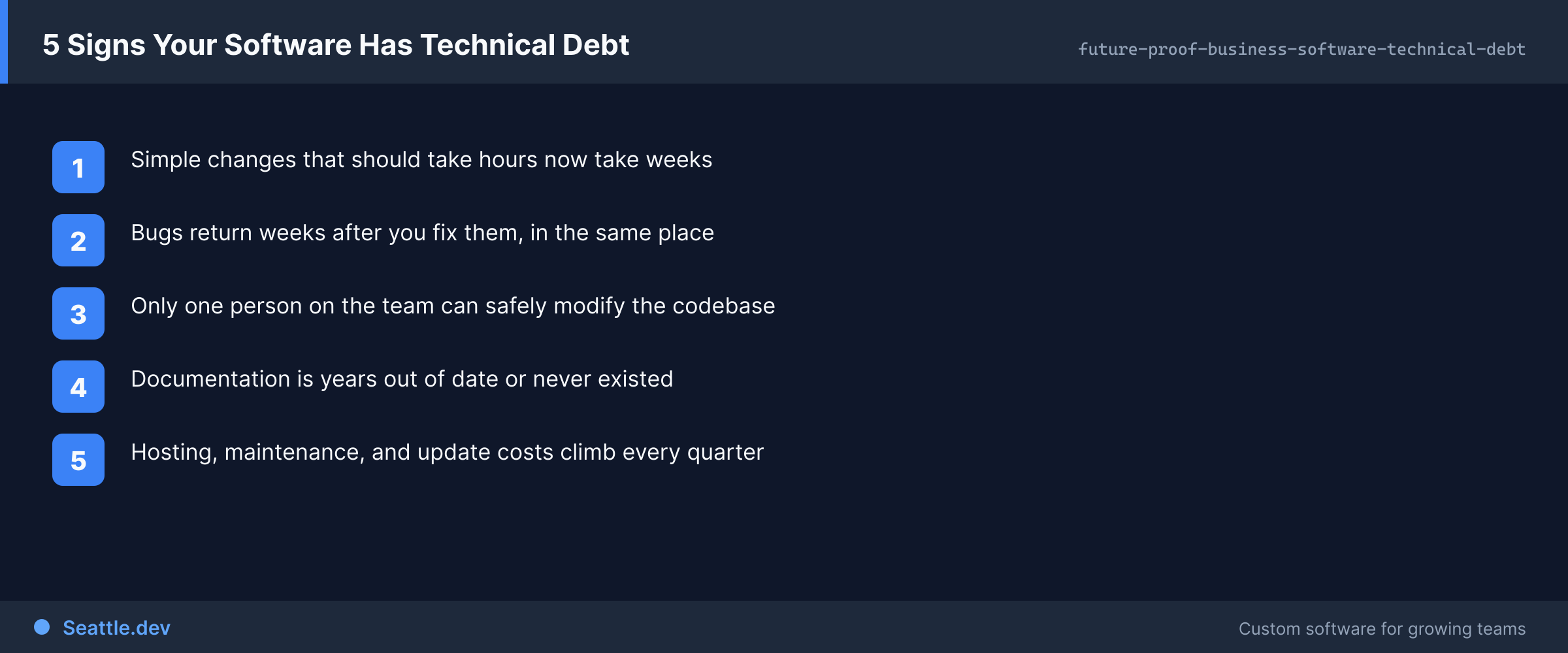
Then something changes. Adding new features becomes difficult. Changes that should take hours take weeks. Bugs emerge in unexpected places when you modify anything. Developers become reluctant to touch certain parts of the code. Eventually, you face a painful choice: invest heavily in rebuilding the system, or continue struggling with software that fights every change.
This deterioration happens so commonly that it has a name: technical debt. Like financial debt, technical debt isn't necessarily bad when taken on deliberately with plans to repay it. But unmanaged technical debt accumulates interest—each shortcut makes future work harder, each quick fix creates complications down the road. Eventually the debt load becomes crushing.
The good news? Technical debt isn't inevitable. Software can remain maintainable, flexible, and valuable for many years. The difference comes down to making better decisions during initial development and maintaining good practices as the system evolves. Let's explore how to build business software that lasts.
How Technical Debt Accumulates
Technical debt doesn't usually result from incompetence or carelessness. It emerges from reasonable decisions made under common constraints.
Speed pressure creates shortcuts. When businesses need features urgently, developers face pressure to deliver quickly. The "right" solution takes two weeks; the quick version takes three days. Under deadline pressure, the three-day version gets built with intentions to clean it up later. But "later" never comes—as soon as one urgent feature ships, the next urgent feature demands attention. These accumulated shortcuts eventually make the codebase difficult to work with.
Changing requirements reveal poor assumptions. Software gets designed based on understanding current needs. Sometimes that understanding proves incomplete. You build a customer management system assuming each customer has one contact person, then discover major clients have multiple contacts with different roles. Retrofitting this change requires reworking foundational assumptions. The quick path is adding awkward workarounds; the right path is refactoring core structures. Time pressure typically drives the workaround, which then complicates everything that follows.
Growth exposes scalability limits. Systems designed for 100 users start struggling with 1,000 users. Databases optimized for thousands of records slow down with millions. Workflows that worked with three team members become bottlenecks with thirty. These scaling problems often require architectural changes rather than simple fixes. But architectural changes are expensive, so businesses try stretching the existing system beyond its design limits, creating performance problems and maintenance difficulties.
Developer turnover loses context. When the original developer leaves, knowledge leaves with them. Undocumented decisions, subtle business logic, and architectural reasoning disappear. New developers inherit code they don't fully understand. They make changes cautiously, preserving patterns they don't recognize as problems because they lack context. This compounds existing issues and prevents improvement because nobody feels confident making substantial changes.
Integration complexity multiplies problems. Business software rarely exists in isolation. It connects with payment processors, communication platforms, data providers, and other business systems. Each integration adds complexity and potential failure points. When integrated systems change their APIs or behavior, your software must adapt. These external changes create maintenance burden that grows with the number of integrations.
The Cost of Technical Debt
Technical debt creates costs beyond just making developers unhappy. It directly impacts business capabilities and competitiveness.
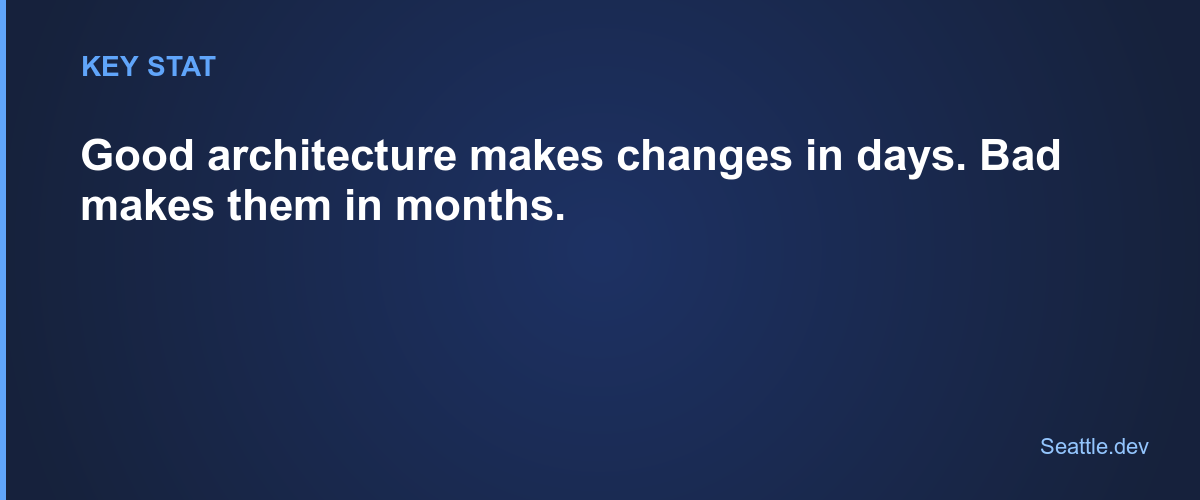
Slow feature development. As technical debt accumulates, adding features takes progressively longer. What used to take days now takes weeks. Your business identifies opportunities or competitive threats that require software changes, but implementation timelines stretch out. This delays market response and limits business agility. You can't move as fast as competitors with more maintainable systems.
Increased bugs and instability. Complex, tangled code creates more bugs. Changes in one area break functionality in unexpected places because connections aren't clear. Your team spends increasing time troubleshooting issues rather than building new capabilities. Customer-facing problems increase. Operations become less reliable. The software that's supposed to enable your business starts disrupting it.
Rising maintenance costs. Maintaining problematic code requires more developer time. Simple updates become complicated projects. More testing is needed because confidence is low that changes won't break things. Developers spend time understanding existing code rather than writing new features. Your development costs increase while productive output decreases.
Rebuilding becomes unavoidable. Eventually, technical debt becomes so severe that partial fixes don't help. The only path forward is rebuilding from scratch. This is expensive—often costing more than the original development—and disruptive. During rebuilding, feature development stops. Your team uses the old system while waiting for the new one, creating transition challenges. Rebuilding is sometimes necessary, but premature rebuilds caused by technical debt waste resources.
Competitive disadvantage. When your software can't adapt quickly to market changes, you lose competitive ground. Competitors with more flexible systems launch features faster, respond to customer needs more readily, and operate more efficiently. Your technical debt becomes a strategic liability that limits what your business can do.
Building for Longevity: Foundational Decisions
Avoiding technical debt starts with good architectural decisions during initial development.
Choose proven, well-supported technologies. The newest, trendiest framework might be exciting, but mature technologies with large communities and long-term support serve business software better. When you're still maintaining this system five years from now, you want abundant documentation, readily available developers who know the technology, and confidence the platform will still be supported. Boring, established technologies often prove to be the right choice for business software that needs to last.
Design data models that accommodate growth. Database structures are expensive to change later. Think through how your data might evolve. If you're tracking customers now, might you need multiple contacts per customer later? Multiple locations? Parent-child relationships between accounts? Design database schemas that allow organic growth without requiring fundamental restructuring. Use patterns that scale—many-to-many relationships instead of hardcoded limits, flexible JSON fields for extensible attributes, proper normalization to prevent data integrity issues.
Build clear separation between components. Software with distinct, well-defined layers remains maintainable. Data access logic separated from business rules separated from user interface logic means changes in one area don't cascade everywhere. When you need to modify how data is stored, display logic doesn't need to change. When you update the interface, business rules remain untouched. This modularity makes the system understandable and limits the scope of changes.
Plan for integration from the start. Business software needs to connect with other systems. Design APIs and integration points as first-class concerns from the beginning, not retrofitted afterthoughts. Clean APIs make connecting new systems straightforward. Well-defined integration patterns prevent each new connection from becoming a custom project. Your software should be built expecting integration, not treating it as an edge case.
Implement comprehensive error handling. Production systems encounter errors—network failures, invalid data, timeout issues, unexpected edge cases. Software built without proper error handling becomes fragile. Good error handling detects problems, logs them with sufficient detail for debugging, alerts appropriate people, and fails gracefully rather than catastrophically. This infrastructure prevents small issues from becoming operational crises.
Development Practices That Prevent Debt
Beyond architectural decisions, daily development practices determine whether technical debt accumulates or stays manageable.
Write code for humans, not just computers. Six months from now, someone will need to understand and modify this code. Maybe that person is you; maybe it's a colleague. Write code that communicates intent clearly. Use meaningful variable and function names. Structure logic to be self-explanatory. Add comments where business logic or decisions aren't obvious from the code itself. The extra time spent making code readable pays dividends every time someone works with it later.
Document decisions and business logic. Code shows what the system does, but often not why. When specific business rules are implemented in particular ways, document the reasoning. Why does this workflow require three approval steps? Why is this data validated this specific way? Future developers need context to make good decisions about changes. Without documentation, they're guessing.
Refactor as you go. When adding features, improve the surrounding code. If you notice a confusing function while working nearby, clean it up. If patterns have changed but old code hasn't been updated, update it. This continuous improvement prevents deterioration. Small, incremental refactoring as part of regular work is far less expensive than large refactoring projects later.
Test meaningfully. Automated tests serve two purposes: they verify functionality works correctly, and they document expected behavior. Good tests make changes safer because you know quickly if something breaks. They also communicate intent—tests show how code is supposed to be used and what outcomes are expected. Balance testing coverage with practicality. You don't need 100% coverage, but critical business logic should have tests that prevent regressions.
Review code with business context in mind. Code review isn't just about catching bugs or enforcing style. It's about ensuring code is understandable and maintainable. When reviewing code, ask: Can I understand what this does? Does it handle errors appropriately? Does it fit existing patterns? Will this be easy to modify later? Reviews from this maintainability perspective prevent technical debt accumulation.
Keep dependencies current. Software depends on libraries, frameworks, and platforms that all receive updates. Staying current with security patches and major updates prevents technical debt from external dependencies. Falling behind means accumulated breaking changes make updates expensive. Regular, small updates are easier than infrequent, massive updates.
Managing Evolving Requirements
Requirements change as businesses grow and markets evolve. How you handle changing requirements determines whether your software stays flexible or becomes rigid.
Build for current needs, design for likely changes. Don't build features you might need someday—that creates complexity without value. But design architecture that accommodates likely evolution. If you're building customer management now and might need vendor management later, use data structures that extend naturally to both. Anticipate direction without prematurely building for it.
Recognize when to refactor vs. patch. When requirements change substantially, you face a choice: adapt existing code or refactor to accommodate the new model. Quick patches accumulate debt; thoughtful refactoring maintains cleanliness. The right choice depends on whether this is a temporary workaround or fundamental change. If core assumptions have changed, invest in refactoring. If it's an edge case, a careful patch might be appropriate.
Maintain architectural consistency. As features get added, maintain patterns established earlier. If authentication works a certain way, new features should use the same approach. If data validation follows specific patterns, new forms should too. Consistency makes the system easier to understand and prevents each feature from being unique. Resist the temptation to solve each new problem with a completely different approach.
Version carefully for breaking changes. When you need to fundamentally change how something works, versioning provides a path forward. Support the old version temporarily while new features use the new approach, then migrate gradually. This prevents breaking existing functionality while enabling progress. Clear versioning strategies let systems evolve without constantly breaking things that already work.
Maintenance as Ongoing Investment
Even well-built software requires ongoing attention. Treat maintenance as continuous investment, not deferred cost.
Schedule time for technical improvement. Don't allocate all development time to new features. Reserve capacity for refactoring, updating dependencies, improving performance, fixing accumulated small issues, and enhancing maintainability. This proactive maintenance prevents debt accumulation. Many teams follow rules like "20% of development time for technical investment" to ensure ongoing system health.
Monitor technical health metrics. Track indicators of technical debt: deployment frequency, time to implement typical changes, bug rates, test coverage, dependency age, performance metrics. These measurements reveal emerging problems before they become crises. When metrics degrade, investigate and address causes.
Invest in developer experience. Make working with the codebase pleasant and productive. Good documentation, clear setup processes, helpful error messages, fast test suites, and efficient development workflows all improve maintenance efficiency. Happy developers produce better work and make fewer mistakes. Quality of life improvements for your development team compound over time.
Transfer knowledge deliberately. When team members change, transfer knowledge intentionally. Pair programming, code walkthroughs, documentation review, and gradual responsibility handoff all preserve understanding. Don't let critical knowledge exist in only one person's head. Shared understanding makes the system more resilient to team changes.
When Rebuilding Makes Sense
Sometimes technical debt becomes so severe that rebuilding is the right choice. Recognize this situation and handle rebuilds strategically.
Rebuilding makes sense when accumulated debt makes even simple changes expensive, when the system can't scale to meet current demands, when core technology becomes unsupported or obsolete, or when the system is fundamentally misaligned with current business needs. These situations justify the investment and disruption of rebuilding.
But rebuild strategically. Don't just recreate the old system in new technology—that wastes the opportunity. Understand what works and what doesn't in the current system. Incorporate lessons learned. Design for current business needs and likely future directions. Use the rebuild as an opportunity to eliminate accumulated workarounds and complexity.
Plan for transitional periods. You typically can't rebuild everything at once. Design rebuilds to proceed incrementally—replace components systematically while maintaining operational systems. This reduces risk and provides value progressively rather than requiring complete rebuilds before any benefit is realized.
Building With Your Future Self in Mind
Every development decision either serves or burdens your future business. The code written today becomes the foundation tomorrow's features build on. Quick shortcuts taken now create expensive complications later. Thoughtful design now enables agility later.
This doesn't mean over-engineering or building for every possible future need. It means making conscious choices about quality, maintainability, and architectural clarity. It means valuing code that communicates intent and handles errors gracefully. It means treating business software as a long-term investment that deserves appropriate care.
Ready to build business software that grows with your company instead of fighting against it? We help Seattle businesses create custom solutions designed for longevity—systems that remain flexible, maintainable, and valuable for years. Schedule a consultation to discuss your software needs and explore how thoughtful development creates lasting value. We'll help you build systems that serve your business not just at launch, but for years of growth and evolution.