
[object Object]

Business partnerships fail more often from poor communication and coordination than from strategic misalignment. Two companies with perfectly aligned interests and complementary capabilities still struggle when they can't efficiently share information, track progress, or coordinate activities.

Partner Portals: Strengthening Business Relationships Through Technology

Business partnerships fail more often from poor communication and coordination than from strategic misalignment. Two companies with perfectly aligned interests and complementary capabilities still struggle when they can't efficiently share information, track progress, or coordinate activities.

Email becomes the default coordination mechanism—contracts buried in threads, asset sharing through attachments, progress updates scattered across messages, and critical information lost in overflowing inboxes. Meetings multiply as people attempt to synchronize by talking since written communication has become unreliable. Partners feel neglected because nobody can see what's happening without actively asking.

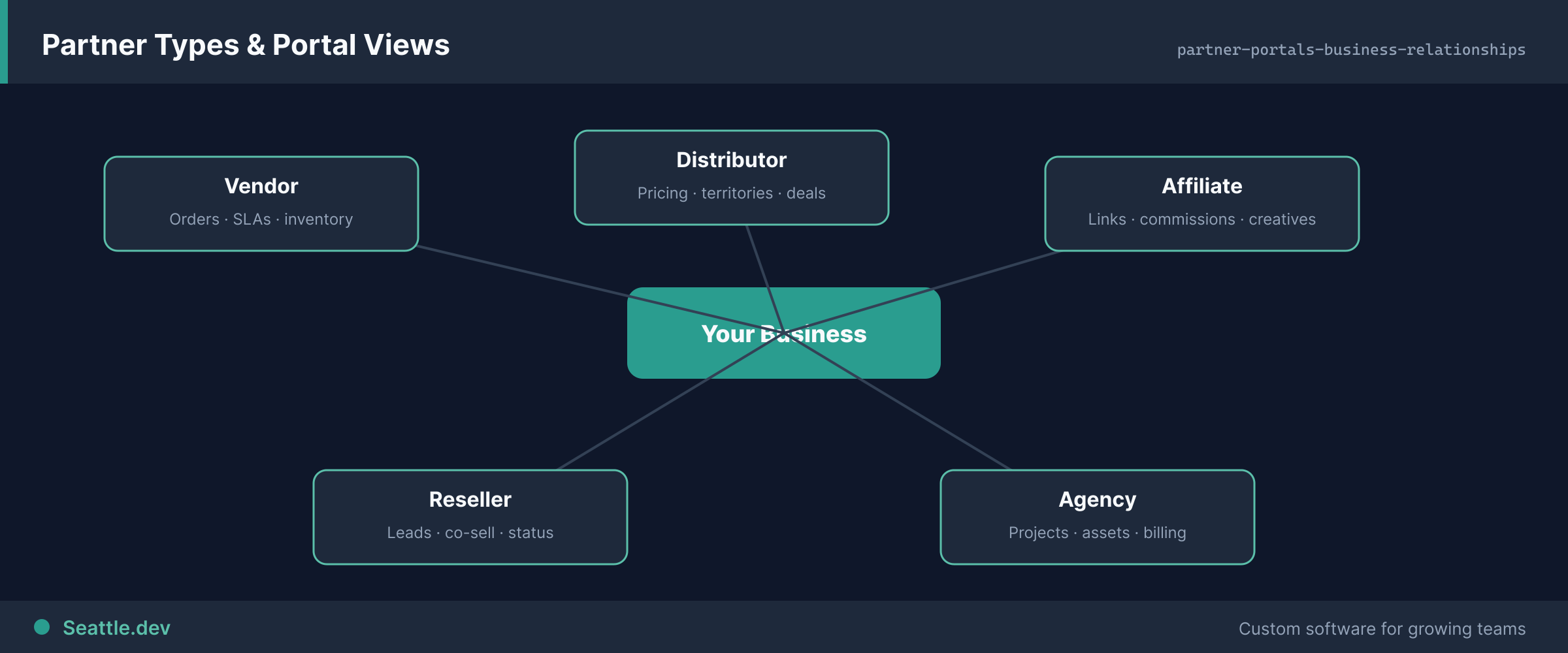
Partner portals solve this coordination problem by creating shared spaces where partners can access resources, track collaboration progress, and maintain visibility into the relationship without constant meetings or email chains. But most partner portals fail because they're built like document repositories when they need to be collaboration platforms. Let's explore how to build partner portals that genuinely strengthen business relationships.

Understanding What Partners Actually Need

The failure point for most partner portals is assuming partners want what you want to give them rather than what they actually need to accomplish. Companies build portals around their organizational structure—here's the marketing folder, here's the sales folder, here's the operations folder. Partners just want to accomplish specific tasks without navigating your org chart.

Partners typically have a few core needs. Access to resources and assets they need to represent your products or services effectively—product information, pricing, sales materials, co-marketing assets, brand guidelines. They need this information current, complete, and easily discoverable without hunting through folders or asking account managers.

Visibility into the partnership's performance and progress—what's the pipeline, what deals are closing, what revenue is being generated, what support tickets exist. Partners need this visibility to prioritize efforts and demonstrate value in the relationship. Without data, they're flying blind.

Communication channels that maintain context—when discussing specific deals, campaigns, or issues, the conversation should stay connected to that context. Email loses this context as threads grow and forward chains multiply. Partners need communication tools that keep discussions organized and accessible.

Self-service capabilities that reduce dependency—registering deals, requesting support, downloading materials, accessing training, and handling routine tasks without waiting for someone to respond. Every task that requires asking someone wastes time for both parties.

Clear understanding of program benefits and requirements—what support is available, what the partner needs to do to qualify for benefits, how to access resources, and who to contact for what. Ambiguity creates frustration and underutilization of program benefits.

Designing Resource Libraries Partners Can Actually Navigate

Every partner portal needs document and asset sharing, but most implement it as a dump of folders that make sense to internal people and confuse everyone else.

Organize by partner tasks, not your internal structure. Partners don't care whether content comes from marketing, sales, or product teams. They care about "I need materials for this product" or "I need to prepare for a customer presentation." Organize content around these partner needs. The same asset might appear in multiple categories because partners look for it in different contexts.

Make search powerful and prominent. Partners know what they want—"2024 pricing sheet" or "logo files" or "integration guide." Search should be the fastest way to find specific items. Implement smart search that handles incomplete terms, finds documents by content not just filename, and learns from what people search for to improve results.

Keep content current and indicate freshness. Nothing destroys trust faster than partners discovering they used outdated materials. Show when content was last updated. Proactively notify partners when important resources change. Archive old content rather than leaving it mixed with current materials where partners might use it accidentally.

Provide multiple formats and variations. Marketing assets should be available in formats partners actually need—high-res images for print, web-optimized files for digital, editable templates for customization. Don't make partners request different formats; provide what they'll need upfront.

Enable content subscriptions and alerts. Partners interested in specific product lines or content types should be able to subscribe to updates. When new resources appear or existing ones change, relevant partners get notified automatically rather than needing to check periodically.

Performance Tracking That Drives Partnership Success

Partners need visibility into how the partnership is performing. This visibility serves multiple purposes—prioritizing efforts toward what works, justifying continued investment in the partnership, and celebrating successes.

Display metrics that matter to partners, not just to you. You might care about market share and strategic positioning. Partners care about revenue, commission, pipeline value, and deal status. Show partner-centric metrics prominently. If strategic metrics matter for program qualification or benefits, show those too, but don't make partners hunt for the numbers that directly affect them.

Provide comparison context. Raw numbers lack meaning without context. Is $50K in quarterly revenue good or disappointing? Show performance against targets, against previous periods, and against program benchmarks (while maintaining confidentiality about other specific partners). This context helps partners understand performance and improvement opportunities.

Make data actionable, not just visible. Seeing that pipeline is weak isn't helpful by itself. Provide next actions—here are pending deals that need attention, here are leads that haven't been contacted, here are opportunities for upselling existing accounts. Turn data into actionable insights rather than passive dashboards.

Track and display milestones and certifications. If your partner program has tiers, certifications, or qualification requirements, show clear progress toward meeting those requirements. Gamification might seem gimmicky, but clear visibility into "you're 80% toward Gold status" motivates effort and reduces ambiguity about program participation.

Celebrate wins prominently. When partners close deals or reach milestones, celebrate it visibly. This recognition motivates continued effort and demonstrates that you're paying attention to their success. Small acknowledgments create disproportionate goodwill.

Communication Tools That Maintain Context

Email's fundamental problem for partnerships is that context gets lost as conversations branch, forward chains multiply, and threads become confusing. Partner portals can solve this by keeping communication connected to relevant context.

Organize communication around specific collaboration areas. Discussions about specific deals should stay with deal records. Conversations about marketing campaigns should stay with campaign planning. Support requests should maintain discussion history. This organization means people can see all relevant communication without searching email or asking for recap.

Enable threaded conversations with notifications. Partners should be able to start discussions, respond to specific messages, and receive notifications when responses arrive. The experience should feel familiar to anyone who's used modern communication tools—more like Slack than email, but without requiring partners to install separate apps.

Make communication searchable and persistent. Unlike phone calls or video meetings where information disappears unless someone takes notes, written communication in portals becomes searchable documentation. This creates institutional knowledge that survives personnel changes and helps new team members on both sides understand history.

Provide appropriate notification control. Some partners want immediate notifications for any activity. Others want daily digests. Some only want alerts for critical issues. Give partners control over notification frequency and channels without requiring them to receive everything or nothing.

Bridge to email when necessary. Some partners will never adopt portal communication completely. Enable email notifications for portal activity and allow email replies that post back to portal discussions. This bridges the gap between early adopters who embrace the portal and those who prefer email workflow.

Enabling Self-Service Partner Operations

Every interaction requiring human intervention wastes time for both partners and your team. Self-service capabilities multiply efficiency for everyone.

Deal registration with clear status and rules. Partners need to register deals quickly and understand approval status. Implement clear rules about what qualifies, fast approval workflows, and transparent status. If deals are rejected, explain why clearly rather than generic denials. Make the process so transparent that partners understand what will be approved before they register.

Training and certification management. If your partner program requires training, make it completely self-service. Partners should be able to access courses, track progress, complete certifications, and see what's required for program tiers without asking anyone. Automate certificate generation and program qualification tracking.

Marketing development fund (MDF) request and approval. If you offer co-marketing funds, streamline the request and approval process. Provide clear guidelines about what's approved, simple request forms, transparent approval workflows, and easy claiming of approved funds. Complicated MDF processes result in underutilization that benefits nobody.

Support ticket creation and tracking. Partners need to request technical support, track ticket status, and see resolution history. Integration with your internal support system ensures tickets don't get lost, status updates appear automatically, and partners have visibility without emailing for updates.

Lead and opportunity management. Partners should be able to register leads, track opportunity status, and see what happened to leads they provided. This closes the feedback loop that's essential for partners to understand what types of leads are valuable and what happens to their referrals.

Managing Partner Tiers and Programs Effectively

Many partner programs offer multiple tiers or tracks with different benefits and requirements. Managing this complexity in ways partners understand is critical for program success.

Make program benefits and requirements crystal clear. Ambiguity about "what do I get for this tier" or "what do I need to qualify" creates frustration and underutilization. Provide explicit lists of benefits at each level, clear qualification requirements, and visible progress toward meeting those requirements.

Automate tier management where possible. If tier qualification is based on measurable criteria—revenue, certifications, customer satisfaction scores—track and apply those automatically. Don't make partners request reviews or wait for manual approval of tier changes when the system knows they've met requirements.

Provide clear paths to higher tiers. Partners in Bronze tier should see exactly what would move them to Silver. Make the path clear and the benefits compelling. If gaps exist, suggest specific actions—complete these certifications, reach this revenue threshold, maintain this customer satisfaction score.

Handle tier downgrades sensitively. If program qualification requires maintaining certain levels and partners fall short, handle downgrades with grace and clear explanation. Provide warnings before downgrade happens and clear paths to regaining status.

Support specialized tracks. Not all partners are the same. Some focus on specific products, some specialize in certain industries, some provide implementation services while others resell. Your program structure should accommodate this diversity rather than forcing everyone into identical roles.

Onboarding New Partners Effectively

First impressions set the tone for entire partnership relationships. Poor onboarding creates struggling partners who never become productive. Excellent onboarding creates engaged partners who quickly drive value.

Provide structured onboarding paths. New partners need clear guidance about what to do first, what comes next, and when they're ready to actively partner. Create onboarding checklists that guide partners through account setup, training, resource familiarization, and first activities. Track progress and provide encouragement as partners complete steps.

Offer live onboarding for high-value partners. While self-service works for many partners, high-potential partners deserve personalized onboarding. Combine portal self-service with scheduled calls, dedicated support, and relationship building that signals investment in their success.

Set clear expectations early. What support will partners receive? How quickly should they expect responses? What are they responsible for versus what you handle? Clarity prevents disappointment and conflict later.

Create quick wins. Help partners achieve early success rather than overwhelming them with everything immediately. If completing one certification unlocks basic program benefits, guide them there first. If registering their first deal is the gateway to engagement, make that process obvious and easy.

Gather feedback and iterate. Survey new partners about onboarding experience and identify friction points. Partners who just completed onboarding have fresh perspectives on what was confusing or difficult. Use their feedback to continuously improve the process.

Measuring Partner Portal Success

Partner portal success isn't measured just by logins—it's measured by whether the portal genuinely improves partnership effectiveness and satisfaction.

Track engagement depth, not just visits. Are partners accessing resources, registering deals, completing training, and using communication tools? Or just logging in briefly and leaving? Depth of engagement indicates value delivery.

Monitor self-service success rates. Track how often partners complete tasks independently versus requesting help. Increasing self-service rates indicate the portal is working as intended.

Measure partnership performance outcomes. Do partners with higher portal engagement perform better? Are they closing more deals, generating more revenue, or maintaining better customer satisfaction? Correlation between portal engagement and partnership success validates the investment.

Survey partner satisfaction regularly. Ask partners directly whether the portal helps them, what's missing, and what frustrates them. Quantitative usage data reveals what people do; qualitative feedback reveals why and how to improve.

Track support deflection. If routine partner questions decrease as portal adoption increases, the portal is successfully enabling self-service. Support teams should handle fewer basic inquiries and focus on complex issues.

Building Your Partner Portal Strategy

Partner portals succeed when they solve real collaboration problems rather than just existing because competitors have them. Start by understanding what currently frustrates partners and wastes time for both sides.

Talk to your most successful partners about what information they need, what slows them down, and what would make the partnership more effective. Talk to your least successful partners about what barriers prevent them from being more engaged. These conversations reveal what actually matters versus what seems like it should matter.

Design around partner workflows rather than internal convenience. The goal is making partners more effective, not making your life easier. When those align—and they often do through self-service and automation—everyone wins.

Ready to build a partner portal that strengthens business relationships rather than just digitizing document sharing? Schedule a consultation to discuss your partner program, current collaboration challenges, and how custom portal development can transform your channel partnerships into competitive advantages.

Ready to Start Your Project?

Let's discuss how we can help bring your ideas to life

Schedule a Free Consultation
Bandmate Footer Background
Seattle.dev Logo

Custom web development and design for Seattle businesses. We specialize in API integration, custom web portals, and business automation.