
Working With Remote Development Teams: What Actually Works
Remote software development is now standard practice. Your development team might be across town, across the country, or across the world. Geographic distribution creates both opportunities and challenges. Done well, remote development provides access to talented developers, flexible arrangements, and often cost advantages. Done poorly, it produces frustrating communication gaps, misaligned expectations, and software that doesn't quite fit your needs.
The difference between successful and problematic remote development relationships isn't primarily about where developers are located. It's about communication patterns, expectation alignment, project structure, and relationship quality. A remote team that communicates well, understands your business, and maintains clear processes often delivers better results than a local team that's technically nearby but doesn't collaborate effectively.
Many businesses approach remote development with anxiety based on horror stories they've heard. Teams that disappeared midway through projects. Software that technically worked but didn't solve actual problems. Communication difficulties that left everyone frustrated. These problems are real and do happen, but they're avoidable through better practices and clearer expectations.
Why Remote Development Often Fails
Understanding common failure patterns helps you avoid them in your projects.
Insufficient requirements clarity. When working with local teams, unclear requirements can be clarified through quick conversations. Remote work lacks this easy back-and-forth, so unclear requirements become bigger problems. Developers build based on their interpretation of vague specifications. You review what they built and realize it's not what you meant. Time and money get wasted on rework that clear requirements would have prevented.
The more remote your team, the more critical clear, detailed, written requirements become. Assumptions that would be caught and corrected quickly in person propagate into completed work that misses the mark.
Time zone and communication barriers. When your team operates on a schedule offset from yours by eight hours, communication becomes asynchronous by necessity. Questions asked in your morning get answered during your evening. Clarifications needed before proceeding must wait a full day cycle. This delay compounds—what could be resolved in a 10-minute conversation stretches into a week of back-and-forth emails.
Language and cultural differences can amplify these challenges. Subtle misunderstandings in English communication or different cultural assumptions about directness, hierarchy, or decision-making create friction.
Lack of business context. Developers who don't understand your business can't make good decisions about the dozens of small choices that arise during development. They implement literal specifications without recognizing when those specifications don't make sense for your actual workflows. They miss opportunities to suggest improvements because they don't understand the broader context.
Remote teams often get treated as pure implementation resources rather than collaborative partners. You specify what to build; they build it. This transactional relationship produces technically correct but operationally awkward software.
Misaligned incentives and priorities. Some remote development arrangements create problematic incentives. Offshore firms that bill hourly but lack transparency about actual hours worked might stretch timelines. Fixed-price contractors might cut corners on quality to maximize profit. Teams juggling many clients might prioritize whoever's loudest rather than actual project needs.
When incentives aren't aligned around delivering genuine value, relationships become adversarial. You're monitoring for signs of problems rather than collaborating toward shared goals.
Inadequate visibility into progress. With local teams, you can see daily progress through informal observation. Remote work requires more intentional communication about status, progress, and blockers. Without clear visibility, you don't know if projects are progressing smoothly or quietly going off track until problems become obvious.
Some remote teams over-communicate to compensate; others go silent for weeks. Either extreme creates problems—information overload or information vacuum.
Building Effective Remote Development Relationships
Success with remote teams comes from deliberate practices that enable effective collaboration despite distance.
Invest heavily in requirements clarity. Spend more time upfront documenting what you need and why. Write detailed specifications. Create workflow diagrams. Provide examples. Document edge cases. This thorough documentation reduces ambiguity that would otherwise cause problems later.
Visual communication helps enormously. Screenshots, mockups, workflow diagrams, and recorded screen tours convey requirements more clearly than text alone. Show what you mean, don't just describe it.
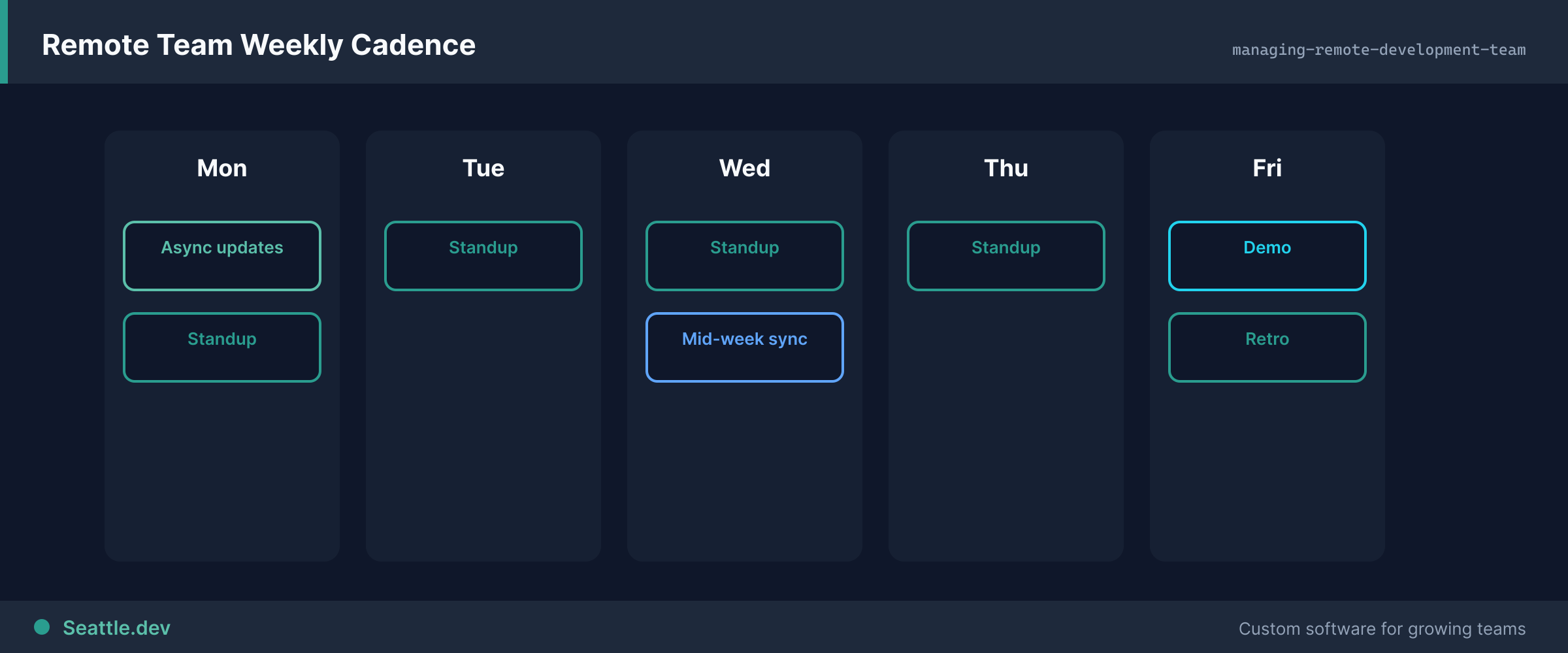
Establish regular communication rhythms. Create predictable communication patterns rather than ad-hoc contact. Daily or weekly check-ins at scheduled times. Regular demo sessions to review progress. Clear channels for different types of communication—urgent questions, progress updates, technical discussions.
Scheduled communication reduces anxiety for both parties. You know when you'll see progress and can ask questions. Developers know when they can get your input and feedback.
Prioritize responsive feedback loops. When developers have questions or share work for review, respond promptly. Nothing stalls remote projects faster than waiting days for answers or feedback. If developers are blocked waiting for decisions, productivity vanishes.
Agree on response time expectations explicitly. How quickly should questions be answered? How soon will you provide feedback on completed work? Clear expectations prevent frustration when waiting.
Use collaboration tools effectively. Modern tools make remote work much more viable. Project management platforms track tasks and progress. Video calls enable face-to-face communication. Screen sharing makes technical discussions clearer. Shared documents ensure everyone works from current information.
Don't just adopt tools—use them consistently. A project management system only helps if everyone actually updates it. Video calls only work if both parties participate actively.
Build understanding of your business context. Help remote teams understand your business beyond just technical specifications. Explain why features matter. Describe your users and their needs. Share your business goals. Provide context about your industry and operations.
This business understanding transforms developers from order-takers into problem-solvers. They make better decisions, suggest improvements, and catch potential issues when they understand the broader context.
Focus on outcomes, not activity. Measure remote teams by what they deliver, not how many hours they report or how busy they seem. Clear milestones, working software, and delivered value matter. Activity metrics and detailed time tracking often create problematic dynamics without improving outcomes.
Outcome-focused relationships trust teams to manage their own time and approach while holding them accountable for results. This works better than micromanaging activity across distance.
Structuring Projects for Remote Success
How you structure projects affects how well remote development works.
Phase projects into clear milestones. Break work into distinct phases with defined deliverables. Complete one phase, review results, and adjust before starting the next. This iterative approach provides multiple checkpoints to ensure alignment rather than discovering misalignment after months of work.
Smaller milestones also manage risk. If a relationship isn't working well, you can adjust or change direction after one phase rather than being committed to a large project.
Prioritize working software over documentation. Regular demonstrations of working software ensure everyone understands what's being built. Seeing functioning features reveals misunderstandings that reading specifications doesn't. Schedule frequent demos—weekly or biweekly—so you're never more than a short period away from seeing actual progress.
Working software demonstrations also motivate teams and provide concrete feedback points. "Make this button blue" is clearer feedback than "the interface should feel more professional."
Maintain clear acceptance criteria. Define what "done" means for each feature or milestone. Clear acceptance criteria prevent arguments about whether work is complete and ensure quality standards are understood. When both parties agree upfront what constitutes complete work, evaluation becomes objective rather than subjective.
Acceptance criteria should cover functionality, performance, edge cases, error handling, and any other quality dimensions that matter for your project.
Allocate time for refinement and adjustment. Don't pack every hour of project timeline with new features. Reserve capacity for refinement based on feedback, bug fixes, performance optimization, and adjustments as requirements clarify. This buffer accommodates the reality that software development involves iteration and learning.
Projects scheduled with no slack inevitably run late because every small issue or change becomes a delay. Planned buffer time makes schedules realistic.
Document decisions and discussions. Remote work requires better documentation discipline. When decisions are made in meetings, document them. When requirements clarify through discussion, update written specifications. This documentation creates shared understanding and reference material when memories fade or team members change.
Good documentation doesn't need to be extensive—clear, concise records of key decisions and current understanding suffice.
Evaluating Remote Development Partners
Not all remote development options are equivalent. Evaluate potential partners carefully.
Look for communication quality, not just technical skills. Technical competence matters, but remote relationships live or die by communication quality. Do potential partners ask clarifying questions about your business? Do they respond promptly to inquiries? Do they explain technical concepts clearly? Communication quality often predicts relationship success better than technical portfolio.
During evaluation, pay attention to how they communicate. If communication is problematic before you commit, it won't improve under project stress.
Assess relevant experience and understanding. Have they built similar software for similar businesses? Do they understand your industry's typical workflows and requirements? Relevant experience reduces learning curve and improves the likelihood they'll build something that actually fits your needs.
Generic development skills aren't enough. You want partners who understand your problem space and can contribute insights from their experience.
Verify references and past work. Talk to previous clients about their experiences. Were projects delivered as promised? How did the team handle problems? Would they work with this team again? References reveal patterns that proposals don't.
Look at previous work examples. Does the quality match your expectations? Does the complexity match your project's requirements? Past work quality usually predicts future work quality.
Understand their team structure and stability. Who specifically will work on your project? How long have they been with the company? What's staff turnover like? You want teams with stability and clear team structures, not revolving-door staff or vague promises about "resources."
If specific developers are promised, ensure those commitments are real. Some firms promise senior developers during sales and deliver junior developers during execution.
Evaluate cultural and working style fit. Do their working practices align with your preferences? Some teams work independently and present completed work; others prefer more collaborative development. Some provide detailed status updates; others prefer less frequent communication. Neither style is inherently better, but mismatched expectations create friction.
Discuss working styles explicitly during evaluation. Ensure mutual expectations align before committing to projects.
Assess their questions about your business. Partners who ask thoughtful questions about your business, users, workflows, and goals demonstrate genuine interest in understanding your needs. Partners who move immediately to technical discussions or proposals without understanding business context might deliver technically competent but operationally poor solutions.
The quality of questions during initial discussions reveals how partners approach problems.
Managing Ongoing Remote Relationships
Once projects start, active relationship management keeps things on track.
Maintain regular visibility into progress. Don't wait until scheduled milestones to see what's happening. Request frequent updates, even informal ones. Review code commits. Watch demo videos. Stay connected with actual work progress so surprises don't emerge late.
This visibility isn't about micromanagement—it's about maintaining shared understanding of project state and catching issues early when they're easy to fix.
Provide feedback quickly and clearly. When you review work, provide specific, actionable feedback promptly. Vague feedback like "this doesn't feel right" gives developers nothing to act on. Specific feedback like "customers need to see order status more prominently—move that information to the top of the page" enables clear action.
Quick feedback keeps projects moving. Delayed feedback stalls progress and frustrates remote teams who are blocked waiting for your input.
Address problems directly and early. When issues emerge—missed deadlines, quality concerns, communication gaps—address them immediately. Remote relationships don't benefit from letting problems fester. Direct, professional discussion of issues enables course correction before small problems become project-threatening.
Many businesses hesitate to raise concerns with remote teams, especially offshore teams. This hesitation usually makes problems worse. Good partners appreciate direct feedback that helps them serve you better.
Adjust communication patterns as needed. If current communication isn't working, change it. Need more frequent check-ins? Ask for them. Getting too much noise and not enough substance? Request more focused updates. Communication patterns should evolve to serve project needs.
Effective remote collaboration requires more communication adjustment than local collaboration. Be willing to experiment with different approaches until you find what works.
Recognize and appreciate good work. Remote teams can feel disconnected from the impact of their work. When they deliver well, acknowledge it. When features launch successfully, share that success. This recognition builds relationship quality and motivation.
Remote work is inherently more transactional than local collaboration. Intentional relationship building counters that tendency.
When to Consider Local vs. Remote Teams
Geography affects projects differently depending on complexity, requirements, and communication needs.
Complex, evolving requirements favor local teams. When requirements are uncertain and will emerge through collaboration, local teams' communication advantages matter more. The ability to have quick synchronous conversations and make rapid collaborative decisions provides substantial value.
Well-defined, stable projects work well remotely. When you know exactly what you need and requirements won't change substantially, remote teams work excellently. Clear specifications enable effective remote execution.
Business domain complexity benefits from local understanding. If your business operates in specialized domains with unusual workflows, local teams often understand context better. Remote teams can learn, but the learning curve adds time and risk.
Standard business applications work well remotely. For common business software patterns—customer portals, inventory systems, workflow automation—remote teams have relevant experience and clear precedents to follow.
Consider hybrid approaches. Sometimes the best answer is combining local and remote resources. Local architects and project managers provide communication and coordination while remote developers handle implementation. This hybrid approach can capture benefits of both models.
Building Software That Serves Your Business
The goal of any development relationship—local or remote—is software that genuinely serves your business needs. Location matters less than communication quality, technical competence, and relationship effectiveness.
Many businesses successfully build excellent software with remote teams. Many others have frustrating experiences. The difference comes down to how relationships are structured, managed, and maintained.
Ready to explore working with a development team that communicates clearly, understands your business, and delivers software that actually fits your needs? We're based in Seattle and maintain close, collaborative relationships with all our clients. Schedule a consultation to discuss your project and experience development partnership built on clear communication, business understanding, and genuine commitment to your success. We're just a phone call away, and we listen first before writing a single line of code.